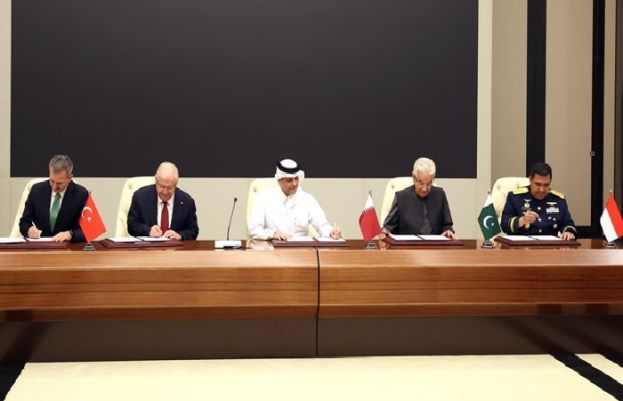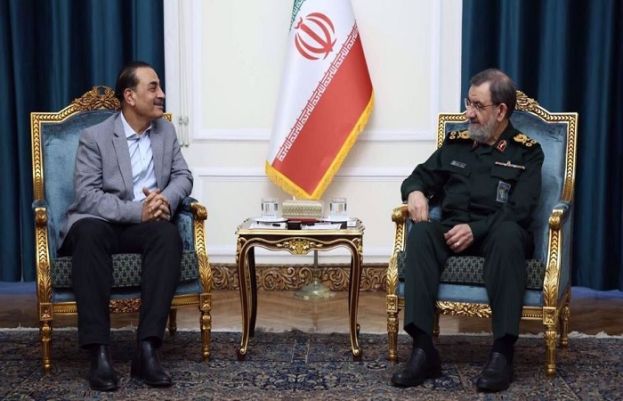

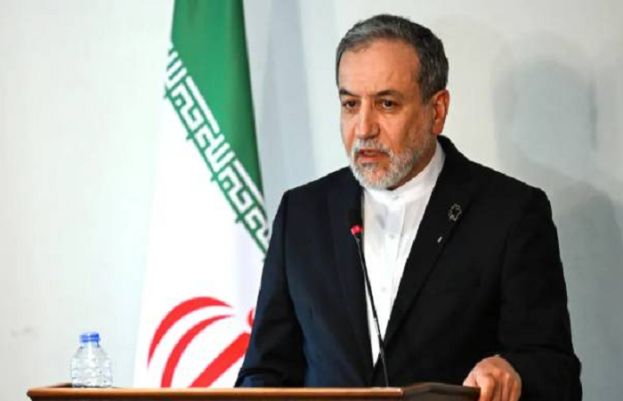
Iranian Foreign Minister Abbas Araghchi has denied that Iran was negotiating with the United States, saying an exchange of messages through “friendly countries” did not equate to talks with Washington. “We do not intend to negotiate,” Araghchi told state TV. “We seek an end to the war on our own terms.” US President Donald Trump is ready to “unleash hell” if Iran does not accept a deal to end the nearly four-week Middle East war, the White House warned Wednesday, but a defiant Tehran said it did not intend to negotiate. The ramped-up rhetoric dashed hopes of any imminent de-escalation as violence on the ground showed no sign of abating, with Iran, Israel, Lebanon, Bahrain, Kuwait, Jordan and Saudi Arabia all coming under fire. Trump insisted later Wednesday that Iran was taking part in peace talks, but Tehran is denying it because their negotiators fear being killed by their own side. “They are negotiating, by the way, and they want to make a deal so badly,” Trump told a dinner for Republican members of Congress. “But they’re afraid to say it, because they figure they’ll be killed by their own people,” he said. “They’re also afraid they’ll be killed by us.” Iranian Foreign Minister Abbas Araghchi denied that Iran was negotiating with the United States, saying an exchange of messages through “friendly countries” did not equate to talks with Washington. “We do not intend to negotiate,” Araghchi told state TV. “We seek an end to the war on our own terms.” In Pakistan, officials said Islamabad had conveyed to Tehran a 15-point American plan to stop the fighting that began on February 28. Iran’ state-controlled Press TV cited an unidentified official as saying Tehran had “responded negatively” to the plan and the war would end only on Tehran’s terms, which include guarantees against future attacks. – ‘Unleash hell’ – White House Press Secretary Karoline Leavitt said talks had been “productive” but declined to say whom the United States was dealing with in Tehran following the assassination of supreme leader Ali Khamenei. His son and successor Mojtaba Khamenei has not been seen in public. “If Iran fails to accept the reality of the current moment… Trump will ensure they are hit harder than they have ever been hit before,” Leavitt said. “President Trump does not bluff and he is prepared to unleash hell.” With thousands more US troops reportedly headed to the Middle East, Iran also threatened to open a new front by targeting Red Sea shipping should the United States launch a ground invasion. Iran’s military said cruise missiles fired at the USS Abraham Lincoln carrier group had “forced it to change its position” and warned of “powerful strikes” when the fleet comes into range. Admiral Brad Cooper, head of US Central Command, said the United States had hit two-thirds of Iran’s production facilities for missiles and drones, and drone and missile launch rates were down by 90 percent. In a video on X, Cooper also estimated that 92 percent of the Iranian navy’s largest vessels had been damaged or destroyed. “They’ve now lost the ability to meaningfully project naval power and influence around the region and around the world,” he said. UN Secretary-General Antonio Guterres said the war was “out of control” and had “gone too far.” – Iranian conditions – According to The New York Times, the 15-point US plan touches on Iran’s contested nuclear and missile programmes as well as “maritime routes.” Tehran has largely blocked the vital Strait of Hormuz oil route in retaliation for the US-Israeli attacks, pushing up global energy prices. The Iranian official quoted by Press TV said Tehran had put forward its own five conditions for hostilities to end. They include a robust mechanism guaranteeing that neither Israel nor the United States will resume the war, and compensation for war damages. Iran’s conditions also include a cessation of hostilities on all regional fronts and against all “resistance groups,” a reference to the Tehran-backed Lebanese group Hezbollah that has been under attack from Israel. Tehran also wants international recognition and guarantees of Iran’s rights to exercise its sovereignty over the Strait of Hormuz. In the event of a US ground invasion, Iran would also block the Bab al-Mandeb Strait, which connects the Indian Ocean to the Red Sea and the Suez Canal, an unidentified military official told local media. Iran supports and arms the Houthi rebel group in Yemen, which greatly reduced Red Sea traffic in October 2023 when it began attacking vessels in retaliation for Israel’s bombardment of Gaza. – “Closed only to enemies’ – While striking targets in Iran on Wednesday, Israel also kept up its campaign against Hezbollah in Lebanon, with planes pounding the southern suburbs of Beirut. Israeli Prime Minister Benjamin Netanyahu said his forces were “expanding” a “buffer zone” in Lebanon, while Hezbollah chief Naim Qassem said negotiating with Israel under fire would amount to “surrender” for Lebanon. Lebanon was pulled into the war when Hezbollah began firing rockets into Israel on March 2 to avenge the killing of Ayatollah Khamenei. According to Lebanese authorities, more than 1,000 people have been killed and upwards of one million people displaced in over three weeks of Israeli strikes. With the war sending energy prices soaring, fuelling fears of higher inflation and weaker global growth, markets remained focused on the Strait of Hormuz, through which one-fifth of the world’s oil usually passes. Araghchi said the strait was “closed only to enemies,” adding that “There is no reason to allow the ships of our enemies and their allies to pass.” Stock markets rallied and oil prices had tumbled on initial reports of potential negotiations, but on Wednesday the Brent crude benchmark crept back above $100 a barrel. – US targets missile capacities – The United States has hit two-thirds of Iran’s production facilities for missiles and drones, and a similar proportion of its naval production, a top officer said. Admiral Brad Cooper, head of Central Command, also estimated that Iran’s drone and missile launch rates were down by 90 percent, and “we’ve also removed the regime’s ability to rebuild them.” – Kuwait arrests six over Hezbollah ‘assassinations’ – Kuwait arrested six people allegedly linked to the Iran-backed Hezbollah group in Lebanon who were planning “assassinations” in the Gulf state, the interior ministry said. – ‘Enemies preparing to occupy’ Iran island – Iran’s powerful parliament speaker warned of the possible invasion of an Iranian island with the support of an unnamed regional country. “Based on some intelligence reports, Iran’s enemies are preparing to occupy one of the Iranian islands with support from one of the regional states,” Mohammad Bagher Ghalibaf posted on X. – Gulf issues Iraq demand – Several Gulf countries, as well as Jordan, demanded in a joint statement that Iraq act immediately to stop attacks from its territory by armed pro-Iran groups. The statement was signed by Saudi Arabia, the United Arab Emirates, Qatar, Kuwait, Bahrain and Jordan. – US rejects Iran talks rejection – The United States and Iran are still engaged in peace talks, the White House said, despite Iranian state media saying Tehran had rejected Washington’s plan to end the war. “Talks continue. They are productive,” Press Secretary Karoline Leavitt said when asked about the Iranian report, adding that there were “elements of truth” to media reports on the details of a 15-point US plan setting out demands on Tehran. – Hormuz ‘toll booth’ legally risky – Maritime trackers reported that a handful of vessels are still crossing daily through the Strait of Hormuz, which is guarded by Iran’s Revolutionary Guard Corps (IRGC), with most of them leaving the Gulf. Shipping journal Lloyd’s List reported that the handful of vessels crossing daily through the strait were taking a new Iranian-approved route dubbed the “Tehran Toll Booth”. At least one vetted vessel paid $2 million to use the corridor around Larak Island just off Iran’s coast, Lloyd’s reported.