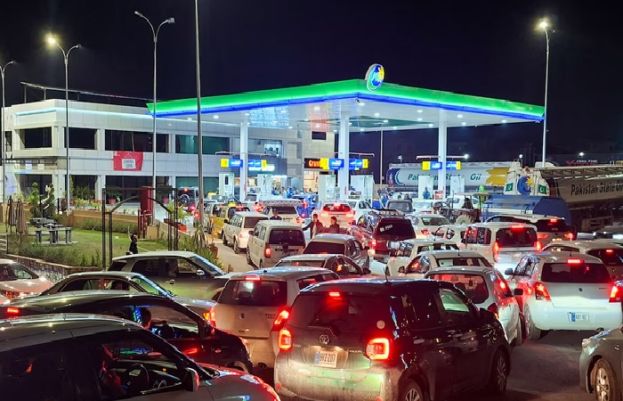

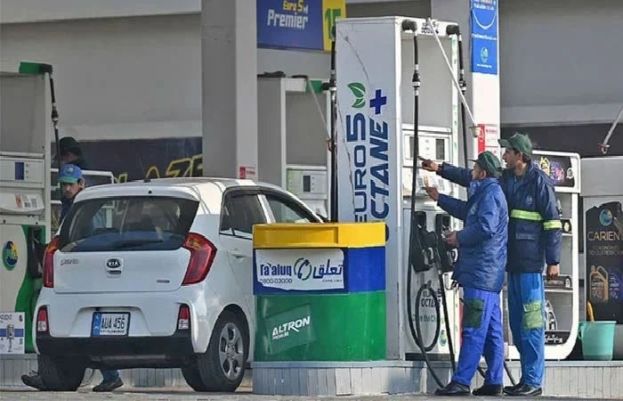
The federal government has revised the mechanism for determining petrol prices amid volatility caused by the Iran-US war, changing how imported and locally refined petrol will be priced. The federal cabinet approved the revised mechanism on October 30, according to Petroleum Division documents seen by Geo News. The changes apply specifically to Motor Spirit (MS), or petrol, while all other parameters for petroleum product pricing will remain unchanged. Under the revised formula, the import price of petrol will be determined on the basis of the actual import cost of the relevant Pakistan State Oil (PSO) cargo. If the actual import cost is unavailable for daily pricing, the premium, incidentals and customs duty of the last available cargo will be used to determine the import price. The change modifies the mechanism introduced earlier this year under which petrol prices were determined using PSO import data and different averaging arrangements. The government has also introduced a temporary mechanism for local refineries for the next 30 days. During this period, the premium, incidentals and customs duty used to calculate the ex-refinery price of petrol will be fixed at the levels effective on March 7, 2026 — before the Iran-US war. Energy Ministry sources said refineries had continued charging premiums equivalent to those on imported petrol following the outbreak of the Iran-US war. The sources said freezing these components at their March 7 levels would result in the ex-refinery price being lower than the import price. Under the new arrangement, refineries will surrender the difference between the import price and their ex-refinery price under the petroleum levy head of account. The refineries have also been directed to report their daily domestic petrol sales and submit deposit records to the Petroleum Division and Ogra for verification and reconciliation. The documents state that the benefit resulting from this adjustment will be passed on to petrol consumers through a corresponding reduction in the fuel’s price. Energy Ministry sources, however, clarified that the existing petroleum levy of Rs80 per litre would remain unchanged. They said the Rs80-per-litre levy had no connection with the relief arising from the new differential mechanism. Instead, the new arrangement concerns the difference created between the higher import price and the temporarily lower ex-refinery price, with refineries required to deposit an equivalent amount under the petroleum levy account. The documents also reveal a separate short-term adjustment aimed at smoothing petrol price movements. According to the Petroleum Division, the petrol premium stood at $19.880 per barrel between October 17 and 27, compared with the calendar-year-to-date premium of $12.998 per barrel — a difference of $6.882 per barrel. The benefit arising from the differential has been incorporated into petrol prices at a rate of $2.950 per barrel per day to ensure price stability. The latest changes come months after the government introduced a daily fuel pricing framework under which Ogra calculates and publishes ex-depot prices of petroleum products.