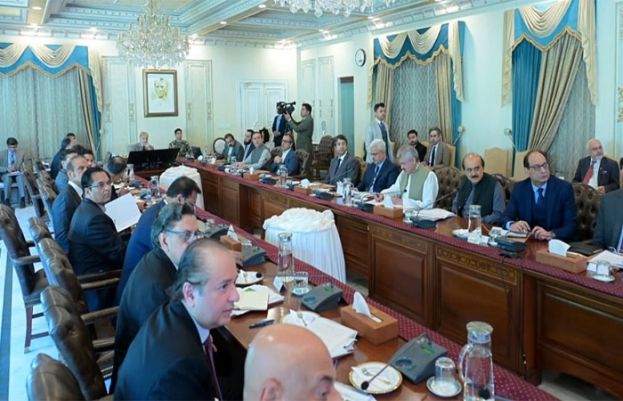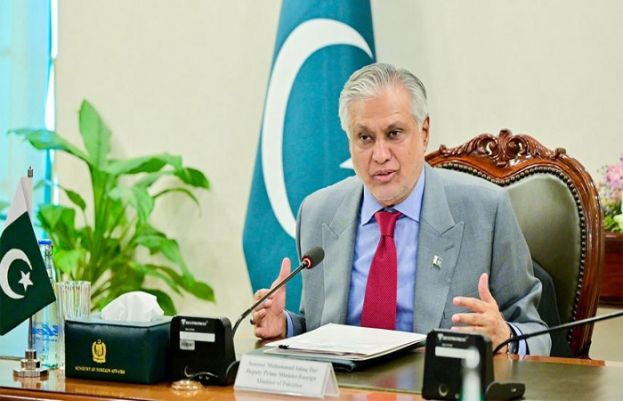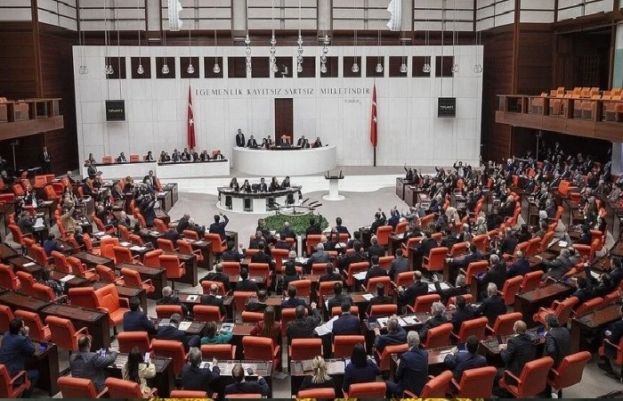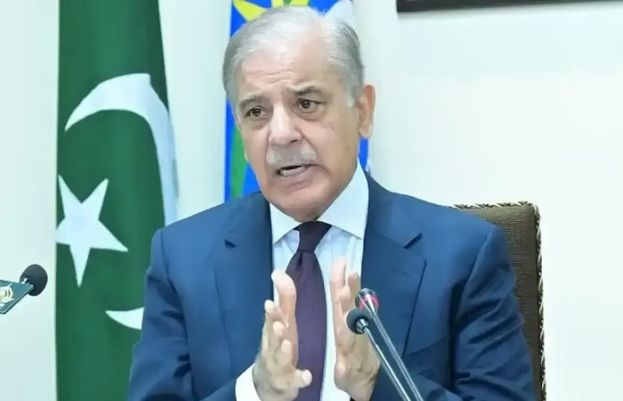

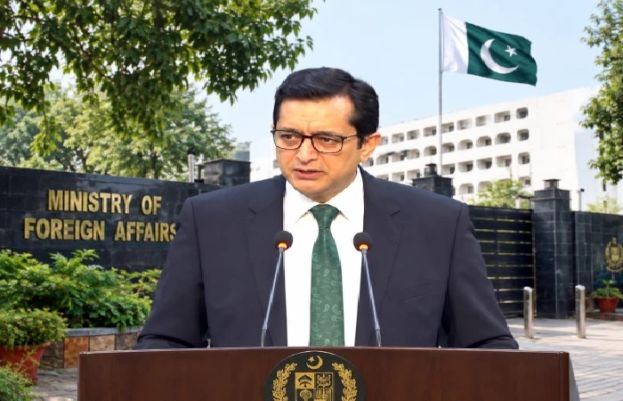
The Foreign Office (FO) on Friday said that the secretary general of the Makkah Defence Alliance, retired Lieutenant General Nauman Mahmood, is expected to assume his responsibilities in Riyadh soon. Mahmood was appointed on Sep 23 as the first secretary general of the alliance between Pakistan, Saudi Arabia and Turkiye. The Makkah Joint Defence Agreement, signed on Aug 7, empowers the three members to consider an armed attack on one member an attack on all. Speaking at the FO’s weekly press briefing on Friday, Spokesperson Sajjad Haider Khan further said that the three members would jointly decide on convening a meeting of their alliance. The Makkah Defence Alliance has garnered particular attention as Saudi Arabia faces attacks by Yemen’s Houthi rebels, including a deadly strike that closed Riyadh’s international airport for two weeks last month. Pakistan is providing “whatever support is needed” to defend Saudi Arabia amid the Houthi attacks, the military’s spokesperson Lieutenant General Ahmed Sharif Chaudhry said in mid-October. However, the Inter-Services Public Relations (ISPR) director general also clarified that all members of the Makkah Defence Alliance were “absolutely clear […] that this alliance has no offensive intent; it is purely defensive”. The DG ISPR added: “Pakistan is giving very strong signals that this collective deterrence is at play, has already been actualised and we will take all necessary steps for the security and territorial integrity of the Kingdom of Saudi Arabia and the Haramain Sharifain (The Two Holy Mosques).” Islamabad has two defence pacts with Riyadh aimed at collective deterrence — the Strategic Mutual Defence Agreement between the two and the Makkah Joint Defence Agreement that also includes Turkiye. On Thursday, the Turkish parliament approved a bill ratifying the Makkah pact, paving the way for the trilateral security pact to come into force. On its part, FO said late last month that Pakistan and Saudi Arabia had already completed the ratification processes, noting that each country followed its own constitutional and legal procedures to approve and ratify international agreements. In his briefing, Khan also touched upon the crisis in the Gulf, saying that Pakistan would continue its efforts to facilitate dialogue in the conflict involving Iran and the United States. He said Islamabad had brought the two parties under one roof despite them having remained out of contact for decades and supported a peaceful resolution through dialogue and diplomacy. Khan cited the Islamabad Memorandum of Understanding (MoU) signed between the warring parties on June 18 as “proof” of Pakistan’s diplomatic efforts. He added that Pakistan, Qatar and other countries were actively contributing to mediation efforts. The FO official emphasised that peace in the region could be established through “political dialogue and diplomacy” rather than war. While acknowledging that the process of negotiations could be time-consuming, Khan asserted that issues could be resolved via diplomacy. Elaborating further, the FO spokesperson said Israel was playing the role of a “spoiler” in the ongoing US-Iran war. Criticising Israel’s expansionist policies, he said peace in the region was not in Israel’s interest and that its expansionist ambitions were among the major causes of the current regional crisis. These ambitions were not limited to Iran, he said, adding that Palestine, Syria, Lebanon and other countries in the region were also affected by Israel’s expansionist designs. When asked about the recent midterm elections in the US, the FO spokesperson said elections were an internal matter of that country and reiterated that Pakistan maintained close relations with Washington. Democrats seized control of the US Congress earlier this week, capturing the Senate and House of Representatives in a stunning, nationwide rejection of Donald Trump set to put the brakes on the final two years of his presidency.