
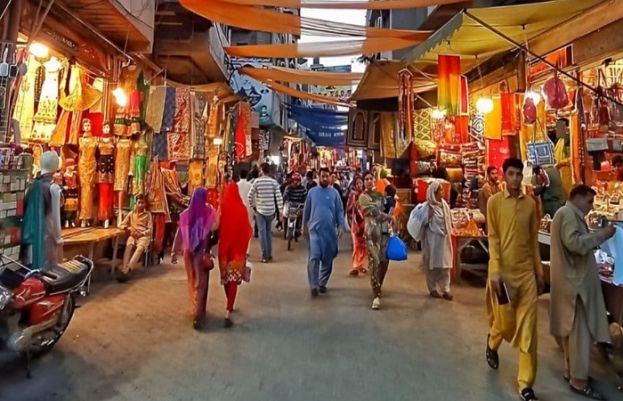
The federal government has announced the closure of markets and shopping malls in all provinces except Sindh at 8pm from April 7 as part of energy conservation measures amid the ongoing Middle East conflict. The decision was taken in a meeting chaired by Prime Minister Shahbaz Sharif on petroleum products on Monday. The measures come as Pakistan moves to mitigate the impact of rising global fuel and energy costs, triggered by the ongoing war in the Middle East. According to the PM Office handout issued today, starting April 7, markets, shopping malls, departmental stores, and daily-use goods shops will close at 8pm in Punjab, Khyber Pakhtunkhwa, Balochistan, Islamabad, Gilgit Baltistan, and Azad Jammu and Kashmir (AJK). In Khyber Pakhtunkhwa, divisional headquarters markets and malls may remain open until 9pm, the statement added. Bakeries, restaurants, tandoors, and food outlets and marriage halls would close at 10pm, adding that private properties and homes will also face restrictions on wedding celebrations beyond 10pm. Medical stores and pharmacies will be exempt from these measures, it added. The prime minister also announced that intercity public transport in Gilgit and Muzaffarabad will be free for one month. The implementation of new measures will take effect from April 7. A day earlier, the provincial governments in Khyber Pakhtunkhwa and Balochistan have ordered early closure of markets, wedding halls and restaurants under energy conservation measures. Rising energy costs The turmoil in the Gulf region has led to a spike in global oil and energy prices, with countries around the world rushing to ration fuel and energy. The more than month-old conflict erupted after the United States and Israel launched joint attacks on Iran on February 28. In its response, Tehran targeted US bases across the Gulf region and effectively blocked the Strait of Hormuz, a key route for oil and energy shipping. Citing impacts of disruptions to the global oil supply chain, Pakistan announced an increase of Rs55 each in the price of petrol and diesel on March 6. The federal government also announced a wide-ranging austerity and fuel conservation plan, including a four-day workweek, a cut in fuel allowance and a 20% reduction in all government departments’ expenditures. However, the petrol price was raised to Rs458.41 per litre on April 2, an increase of Rs137.23, while diesel rose to Rs520.35 per litre, up by Rs184.49. At the time, federal ministers attributed the sharp increase to the rising international oil prices amid the Middle East conflict. A day later, Prime Minister Shehbaz Sharif reduced the petrol price to Rs378 per litre for a month, slashing the petroleum levy by Rs80 per litre.