
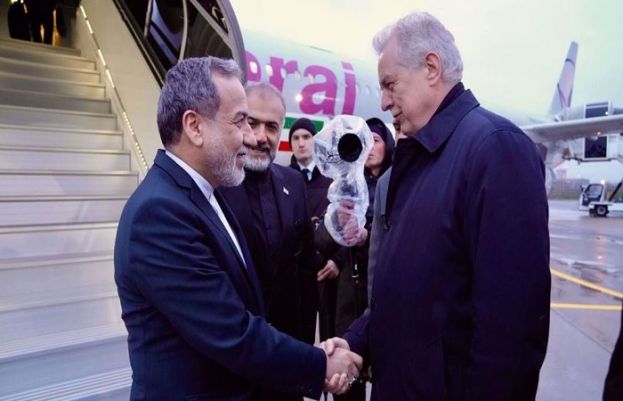
Iran’s Foreign Minister Abbas Araghchi has arrived in Russia to continue close consultations between Tehran and Moscow on regional and international issues, and to enhance bilateral relations. Speaking upon arrival at Pulkovo International Airport in St. Petersburg on Monday, Araghchi noted that due to the recent US-Israeli aggression against the country, there had been a gap in meetings with Russian counterparts. “We have tried to use the available opportunity, following our trips to Pakistan and Oman, to travel to Russia,” he said. Araghchi added that Monday’s meeting would be a good opportunity to discuss developments in the war and review the latest situation, expressing confidence that consultations and coordination between the two countries would be of particular importance. Constructive consultations held in Pakistan Regarding his trips to Islamabad and Oman over the past three days, the foreign minister emphasized the bilateral nature of the visits. Pointing to Pakistan’s role as a mediator in Iran-US negotiations, Araghchi said it was necessary to review the latest situation with Pakistani officials. “Previous negotiations, despite some progress, did not achieve their goals due to American approaches, their excessive demands, and their wrong policies. Therefore, we needed to hold consultations with our friends in Pakistan to review the latest developments,” Araghchi explained. He stressed that Iran’s position in the negotiations is very important. “We must secure the rights of the Iranian people after 40 days of resistance and protect the country’s interests,” he added. Iran-Oman expert-level consultations on Strait of Hormuz to continue Referring to his meetings with senior Omani officials, Araghchi noted that Iran and Oman are both littoral states of the Strait of Hormuz, and it is necessary for them to consult each other, especially as safe passage through the strait has become a globally significant issue. “It is natural that as two coastal countries of this strait, we must talk to each other to secure our common interests and coordinate any action taken in this regard, because the interests of Iran and Oman are directly involved in this matter,” Araghchi said. He confirmed that there is a broad consensus between Iran and Oman, and it was agreed during the visit that consultations would continue at the expert level. Iran closed the waterway to the enemies and their allies following the launch of the US-Israeli aggression against Iran on February 28, with the assassination of the Leader of the Islamic Revolution, Ayatollah Seyyed Ali Khamenei, and several top military commanders. On April 8, forty days into the war, a temporary Pakistan-brokered ceasefire took effect. Talks ensued in Islamabad but stopped short of an agreement amid the United States’ maximalist demands and insistence on unreasonable positions. Iran announced the reopening of the chokehold to commercial traffic following the announcement of a ceasefire by US President Donald Trump on April 7. The country, however, imposed a total closure on the waterway on April 18 after Trump said the US was continuing an unlawful blockade it had imposed on Iran in continuation of unlawful aggression towards the country.