
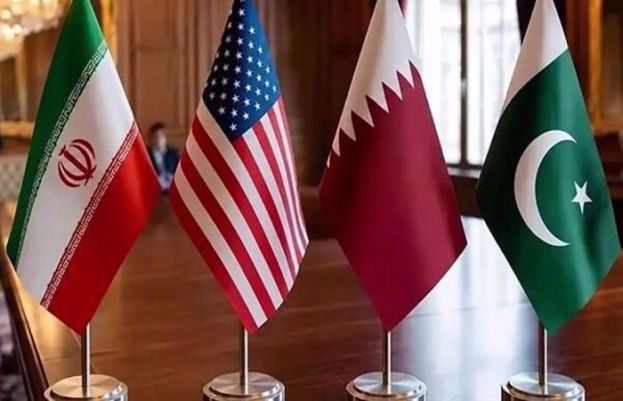
An Iranian delegation discussing implementation of a recently signed memorandum of understanding with the US has successfully pressured the American side into ensuring continued cessation of aggression against Lebanon. The media committee associated with the delegation reported the matter in a statement on Monday, referring to it as one of the five key developments that have been realized so far during the talks, which started in Switzerland on Saturday. “As a result of pressure exerted by the Iranian negotiating delegation, the cessation of hostilities in Lebanon has, for the time being, remained in place since Saturday afternoon, albeit in a fragile manner,” the committee said. The talks have gone underway to discuss implementation of commitments made under the Pakistan-mediated memorandum, which was recently signed by the Iranian and American presidents. The diplomatic process seeks to bring an end to the cycle arising out of the latest unprovoked American-Israeli aggression against the Islamic Republic that went underway between February 28 and April 7, when US President Donald Trump announced a ceasefire amid decisive Iranian retaliation. As part of the MoU, the Islamic Republic has insisted on cessation of aggression on all fronts, including Lebanon. Following the signing of the memorandum, the United States said the Israeli regime had agreed to a ceasefire in Lebanon. Also on Saturday, Iran closed the strategic Strait of Hormuz in response to Israeli violations against the Lebanese territory in order to apply pressure on Washington to ensure implementation of the ceasefire. Iran joins ceasefire stabilization mechanism in Lebanon Explaining the achievements made so far during the talks in Switzerland, the media committee added, “To help stabilize the ceasefire, a monitoring mechanism known as the ‘Conflict Control Unit’ will be established with Iranian participation.” “Under this mechanism, the Islamic Republic will, in effect, become formally involved in Lebanon’s security arrangements, despite extensive efforts by the United States in recent months to remove Iran from the matter. The occupying regime will have no role within this mechanism.” Consolidation of Iran’s sovereignty over Strait of Hormuz The second development, the committee added, concerned the Strait of Hormuz and guarantees for its gradual reopening. “It has been agreed that a direct communication channel will be established so that, in the event of implementation-related problems, parties can contact Iran and convey their concerns,” it noted. “This development signifies the consolidation of Iran’s sovereignty over the Strait of Hormuz.” Iran’s preconditions for entering talks on deal According to the committee’s statement, it was additionally agreed that three working groups focusing respectively on the nuclear issue, sanctions, and monitoring, will begin their work only after implementation of Article 13 of the memorandum. “This includes: A ceasefire on all fronts, particularly in Lebanon; the beginning of the lifting of the [US’s illegal] maritime blockade [against Iran]; the start of the release of Iran’s frozen assets; and the issuance of sanctions waivers removing restrictions on the oil, petrochemical, and petroleum derivatives sectors,” the statement read. The committee noted that, in practical terms, this meant that the Islamic Republic would not enter negotiations towards reaching an official agreement with the American side, before Article 13 was implemented. Iran, Qatar agree on unfreezing assets Fourthly, the talks featured agreement between Iran and Qatar on a memorandum concerning the release of Iran’s frozen assets, the statement noted. Qatari representatives have also joined the talks in Switzerland as part of Doha’s contribution to the diplomatic process. Iran secures oil, petchem sale waivers Meanwhile, during the Switzerland talks, and pursuant to Article 10 of the Iran-US MoU, the Office of Foreign Assets Control (OFAC) of the US Department of the Treasury issued documents providing sanctions relief for Iran’s oil, petrochemical, and derivative sectors for a period of 60 days. “This means that Iran can officially sell oil to its customers and receive payment through the formal mechanisms of the [Islamic Republic’s] Central Bank.”