
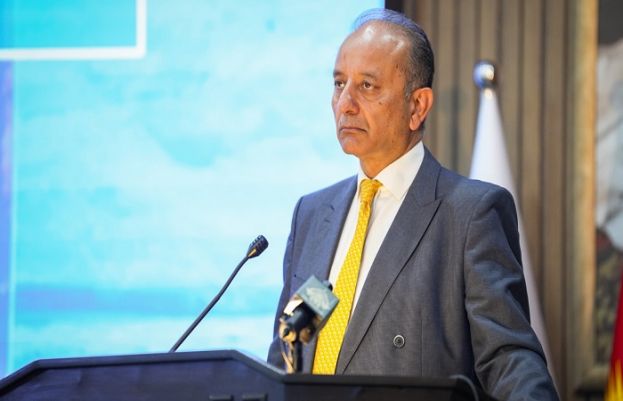
Federal minister for Climate Change, Musadik Malik, on Tuesday called for a new international legal framework to protect transboundary water resources, arguing that disputes over shared rivers were no longer merely environmental or climate issues but matters of justice, food security and global stability. Addressing a seminar on the Indus Waters Treaty organised by the Institute of Regional Studies, Malik said the world needed to move beyond “non-binding declarations” and establish an enforceable international covenant carrying political, economic and diplomatic consequences for states that violate water-sharing obligations. “There must be a covenant which has political consequences, economic consequences and diplomatic consequences,” he said. “Rise now, or hold your peace forever.” Framing his remarks around the story of a Pakistani farmer, Iqbal Solangi, Malik said repeated floods had destroyed the man’s livelihood over the past 15 years, forcing him to abandon farming after generations of cultivating the land. According to the minister, Solangi survived devastating floods in 2010, returned to rebuild his farm, only to lose everything again in 2012 and then once more in 2022. His livestock, home, children’s school and means of livelihood were washed away, ultimately forcing him to seek labour work in Karachi. Malik said Solangi’s story reflected the experiences of millions across the world, from Bangladesh to Africa, where communities were increasingly vulnerable to disruptions in river flows. “Iqbal Solangi is not alone in this universe,” he said, drawing parallels with Bangladeshi farmers and fishermen, women in Africa’s Sahel region who walk miles each day to collect water, and communities living along the Nile, Mekong and the shrinking Aral Sea. He argued that the central challenge was not simply floods or droughts but the inability of downstream populations to control the water on which their lives depended. “The danger is not just too little water or too much water. The danger is that someone else who is not you has his hand on the tap that controls your water,” Malik said. Referring to fluctuations in water flows at Marala, he said river discharge had risen dramatically before falling again without corresponding rainfall, describing it as evidence that upstream control over water posed a serious threat to downstream communities. The minister said nearly half of Pakistan’s population, around 120 million people, depended on agriculture, while about a quarter of the country’s economy and its entire food security relied on the uninterrupted flow of the Indus river system. “This is neither a crisis of climate nor a crisis of water,” he said. “This is a crisis of justice.” Malik also linked climate change to water insecurity, saying the same neighbouring country that Pakistan accused of seeking control over river flows was among the world’s largest greenhouse gas emitters, contributing to rising temperatures, accelerated glacier melt and increased downstream flooding. Questioning the adequacy of international law governing shared rivers, he said countries could not simply reject international legal jurisdiction over transboundary water disputes without undermining global confidence in treaty-based arrangements. He urged the international community to develop binding legal mechanisms to govern shared water resources, arguing that while global institutions existed to regulate trade and nuclear proliferation, comparable enforcement mechanisms for water security remained absent. “We have organisations and laws that govern trade. We have organisations and laws that control nuclear proliferation. But you have no laws for water, for agriculture, for food, for drinking water,” Malik said, calling on international experts to pursue binding solutions rather than voluntary commitments.